
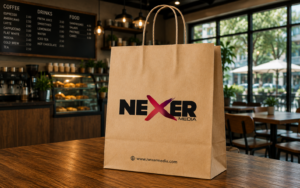
The food and beverage industry is changing rapidly. Restaurants, cafés, bakeries, coffee shops, cloud kitchens, hotels, and takeaway businesses are no longer thinking about packaging simply as something used to carry an order. Packaging has become part of the customer experience, part of a brand’s identity, and increasingly, part of its environmental responsibility.
One of the clearest examples of this shift is the growing use of eco-friendly paper bags for food packaging.
For decades, plastic bags offered businesses an inexpensive and convenient way to package takeaway orders. However, increasing concern about plastic waste, changing customer expectations, sustainability initiatives, and the demand for more attractive branded packaging are encouraging food businesses to explore better alternatives.
Paper bags, particularly kraft paper bags and custom printed paper bags, offer a combination of practicality, sustainability, and branding potential that makes them especially attractive to modern food businesses.
Paper and paperboard have already been widely used across food applications, including bakery products, confectionery, beverages, and other packaged foods. At the same time, major food companies are increasingly exploring shifts from virgin plastics toward paper and other alternative packaging materials.
For restaurants and cafés, this transition creates an important opportunity.
Instead of viewing a takeaway bag as disposable packaging, businesses can transform it into a sustainable and highly visible part of their brand.
At Nexer Media, we help businesses create professional custom packaging and printing solutions designed to make their brands more recognizable wherever their products go.
In this guide, we explore why eco-friendly paper bags are the future of food packaging, their advantages for food businesses, their branding potential, and what restaurants, cafés, bakeries, and delivery businesses should consider when making the switch.
The Food Packaging Industry Is Moving Toward Sustainability
Packaging has always served a practical purpose.
It protects food, makes transportation easier, helps maintain hygiene, and allows customers to carry takeaway orders conveniently.
But modern packaging is expected to do much more.
Customers increasingly encounter brands through takeaway and delivery orders. The bag arriving at someone’s home or being carried through a shopping mall may be one of the most visible physical representations of that restaurant.
Meanwhile, sustainability has become a larger consideration in packaging decisions.
Businesses are looking for ways to reduce unnecessary plastic and use packaging materials that fit more easily into recycling and waste-management systems.
This movement can also be seen among major food and beverage companies. Nestlé Pakistan, for example, describes reducing virgin plastics and shifting toward paper and alternative materials as part of its sustainable packaging strategy.
For smaller restaurants, cafés, bakeries, and food brands, the same broader trend creates an opportunity to modernize their packaging.
And one of the simplest places to start is the takeaway bag.
What Are Eco-Friendly Paper Bags?
Eco-friendly paper bags are packaging bags manufactured primarily from paper-based materials and designed to provide a more sustainable alternative to conventional single-use plastic bags.
One of the most common materials is kraft paper.
Kraft paper is widely used for takeaway bags because of its strength, durability, natural appearance, and printability.
Depending on their construction and coatings, paper bags can also offer characteristics important for food businesses, including:
- Strong carrying capacity
- Flat-bottom construction
- Grease resistance
- Multiple size options
- Custom printing
- Recyclability
- Biodegradability in appropriate designs
- Compatibility with takeaway containers
Paper bags are commonly available in several formats, including SOS-style bags without handles, flat-handle bags, twisted-handle bags, and premium shopping-style paper bags.
The right choice depends on the type of food being packaged, the weight of the order, presentation requirements, and the desired customer experience.
1. Paper Bags Can Reduce Dependence on Single-Use Plastic
Perhaps the most obvious reason behind the growth of sustainable food packaging is the effort to reduce dependence on disposable plastic.
Plastic is extremely useful as a packaging material, but conventional single-use plastic products can create significant waste-management challenges.
Food businesses can distribute hundreds or thousands of takeaway orders every month. At scale, changing one frequently used packaging item can significantly reduce the amount of conventional plastic entering the business’s packaging stream.
Replacing appropriate plastic takeaway bags with paper alternatives therefore represents a visible step toward more sustainable operations.
It also gives businesses a practical way to communicate their environmental priorities directly to customers.
A customer doesn’t need to read a sustainability report to notice the difference.
They can see it in the packaging they receive.
2. Paper Bags Fit the Growing Demand for Sustainable Food Packaging
Sustainability is increasingly influencing packaging decisions throughout the food industry.
Businesses are exploring materials such as:
- Kraft paper
- Recycled paper
- Bagasse
- Bamboo
- Paperboard
- Compostable materials
- Recyclable packaging
Recent packaging industry discussions in Pakistan, for example, increasingly highlight kraft paper, paper bags, bagasse, and other alternatives as practical options for restaurants and food brands.
Paper bags fit naturally within this broader transition.
They are familiar to consumers, practical for many takeaway applications, highly customizable, and relatively easy for restaurants to integrate into existing operations.
That combination is important.
Sustainable packaging will only become mainstream when businesses can adopt it without sacrificing functionality.
Paper bags help bridge that gap.
3. Eco-Friendly Packaging Can Strengthen Brand Perception
Customers judge businesses through countless small interactions.
Food quality is obviously essential, but customers also notice:
- Presentation
- Cleanliness
- Packaging
- Delivery experience
- Branding
- Convenience
- Attention to detail
Packaging becomes especially important because it is often the customer’s first physical interaction with an order.
Imagine receiving the same meal in two different ways.
One arrives inside an ordinary unbranded disposable bag.
The other arrives inside a well-designed kraft paper bag featuring the restaurant’s logo, brand colors, website, and carefully considered typography.
The food may be identical.
The perceived experience isn’t.
Professional custom food packaging can make an ordinary takeaway order feel considerably more premium.
That is why restaurants should think beyond simply asking:
“What is the cheapest bag available?”
A better question is:
“What does our packaging communicate about our brand?”
4. Custom Printed Paper Bags Turn Packaging Into Advertising
One of the biggest advantages of paper bags is their printability.
A plain takeaway bag performs one job:
carrying the food.
A professionally designed custom printed paper bag can perform several jobs simultaneously.
It carries the food.
It displays your brand.
It increases recognition.
It communicates contact information.
It can promote social media accounts.
And it can potentially be seen by many people between the restaurant and the customer’s final destination.
Think about a customer leaving a busy café carrying a branded bag.
They may walk through:
- Shopping malls
- Offices
- Residential buildings
- Hotels
- Streets
- Universities
- Events
- Public spaces
Everyone who sees the bag potentially sees the brand.
This effectively turns packaging into a form of mobile advertising.
Unlike many traditional advertisements, branded packaging doesn’t interrupt the customer.
It is simply part of the product experience.
For businesses looking to create consistent branded packaging, Nexer Media provides printing solutions including shopping bags, paper cups, PET cups, and other customized materials for businesses.
5. Kraft Paper Creates a Natural and Premium Appearance
Another reason kraft paper bags for restaurants have become popular is their distinctive appearance.
Natural brown kraft paper immediately creates associations with simplicity, craftsmanship, sustainability, and authenticity.
This visual style works particularly well for:
- Specialty coffee shops
- Artisan bakeries
- Organic food brands
- Healthy restaurants
- Burger restaurants
- Sandwich shops
- Dessert businesses
- Premium takeaway brands
- Juice bars
- Boutique food businesses
Minimal branding can look particularly attractive against natural kraft material.
A simple logo printed prominently on the front can often create a stronger visual identity than an overly complicated packaging design.
White paper bags provide another option for businesses looking for a cleaner or more contemporary aesthetic.
The material therefore doesn’t limit creativity.
Instead, it gives designers a strong foundation for creating packaging that feels intentional.
6. Paper Bags Are Highly Customizable
Every food business has different packaging requirements.
A bakery selling croissants has different needs from a restaurant packing family meals.
A coffee shop may need smaller takeaway bags, while a catering business may require larger, stronger options.
Paper bags can be manufactured and customized in various:
- Sizes
- Paper weights
- Colors
- Handle types
- Shapes
- Printing styles
- Finishes
- Branding configurations
This flexibility allows businesses to create packaging that actually matches their products.
Custom printing can include:
Business logo
The most important branding element for recognition.
Brand colors
Consistent colors strengthen visual identity across packaging.
Website
Adding your website can encourage customers to explore your business after their purchase.
Social media information
Instagram and other social platforms can help turn offline customers into online followers.
QR codes
A QR code can direct customers toward menus, websites, ordering pages, loyalty programs, promotions, or social profiles.
Brand messages
Simple messages such as “Thank You,” sustainability statements, or short brand slogans can add personality.
This is where custom paper bag printing becomes much more than decoration.
It becomes part of the overall marketing strategy.
7. Paper Bags Work Across Different Food Businesses
Another advantage of paper bags is versatility.
They are not limited to one type of food business.
Restaurants
Restaurants can use larger kraft paper bags for takeaway meals, food containers, and multi-item orders.
Cafés
Coffee shops can combine custom paper bags with branded paper cups to create a consistent takeaway identity.
Bakeries
Bread, pastries, cookies, cakes, and other bakery products can be presented inside attractive branded paper packaging.
Fast-Food Restaurants
Burger, sandwich, fries, and takeaway brands can use strong paper bags for high-volume orders.
Juice Bars
Juice businesses can pair printed paper bags with custom PET cups and other branded packaging.
Hotels
Hotels can use premium paper bags for cafés, takeaway services, room-service items, gift products, or food counters.
Cloud Kitchens
For businesses without physical storefronts, packaging becomes even more important.
A cloud kitchen’s delivery packaging may effectively serve as its storefront.
Catering Businesses
Branded bags can improve the professional presentation of catering orders while maintaining brand consistency.
Because paper bags can be customized to different dimensions and applications, they can become a standard component of a much larger packaging system.
8. Eco-Friendly Paper Bags Complement Food Delivery
Food delivery has changed the role of packaging.
Previously, customers primarily experienced a restaurant by visiting its physical location.
Today, many customers experience restaurants almost entirely through delivery.
That means the packaging arriving at their door carries enormous branding responsibility.
A customer may never see:
- Your restaurant interior
- Your signage
- Your menu boards
- Your uniforms
- Your décor
But they will see your packaging.
That makes the delivery bag one of the most valuable pieces of physical brand real estate available.
A thoughtfully designed branded paper bag for food delivery can create a more memorable experience and help establish professionalism before the customer even opens the order.
9. Paper Bags Can Encourage Reuse
Another useful characteristic of durable paper bags is that customers may reuse them.
A well-made paper bag can sometimes be used again for:
- Carrying small items
- Storing household products
- Lunches
- Gifts
- Organizing belongings
- Shopping
From a branding perspective, reuse is valuable.
Every additional use gives the printed logo another opportunity to be seen.
This is another reason businesses should invest in packaging quality rather than treating bags as completely disposable items.
Better construction can improve both customer experience and the useful life of the packaging.
10. Sustainable Packaging Can Help Differentiate Your Business
Food markets are crowded.
Customers can often choose between dozens of restaurants selling similar products at similar prices.
Businesses therefore need small but meaningful ways to differentiate themselves.
Packaging provides one of those opportunities.
Consider two competing cafés.
Both offer good coffee.
Both have similar pricing.
Both deliver quickly.
But one sends orders in generic packaging while the other uses professionally printed paper bags and matching branded cups.
The second café creates a more complete brand experience.
Over time, these details can contribute to stronger recognition.
Customers begin remembering:
- The logo
- The colors
- The packaging
- The presentation
- The overall experience
That is how packaging contributes to brand building.
11. Paper Bags Work Beautifully With Other Branded Packaging
Paper bags become even more powerful when they are part of a complete packaging system.
Imagine a café takeaway order featuring:
- Custom printed coffee cup
- Branded cup sleeve
- Printed napkin
- Custom food box
- Branded kraft paper bag
Every element follows the same visual identity.
The result feels deliberate and professional.
Restaurants can create similar combinations using:
- Paper bags
- Burger boxes
- Pizza boxes
- Food containers
- Sandwich wrappers
- Cups
- Stickers
- Tablemats
The goal is consistency.
When every customer touchpoint looks connected, even a relatively small food business can develop the visual presence of a much larger brand.
Nexer Media offers printing services across multiple branded packaging formats, helping businesses build that consistent visual identity.
12. Better Packaging Can Improve the Customer Experience
Sustainability isn’t the only reason to use paper bags.
Functionality still matters.
Good food packaging should make the customer’s experience easier.
Features such as:
- Strong construction
- Reinforced handles
- Appropriate bag dimensions
- Stable bottoms
- Quality paper
- Suitable food-contact design
- Professional printing
all contribute to the experience.
Flat-bottom paper bags, for example, can make it easier to organize takeaway containers upright.
Different handle styles can improve carrying convenience depending on the order weight.
Paper weight can also be selected according to the expected load.
The best packaging therefore balances three priorities:
Sustainability + Functionality + Branding
Focusing exclusively on one while ignoring the others can create problems.
13. Eco-Friendly Packaging Creates Social Media Opportunities
Modern food is highly visual.
Customers regularly photograph:
- Coffee
- Desserts
- Restaurant meals
- Takeaway orders
- Packaging
- Unboxing experiences
Beautiful packaging therefore has potential beyond the physical customer experience.
A well-designed branded paper bag appearing in a customer’s Instagram Story or TikTok video extends the brand’s visibility into digital spaces.
Restaurants can encourage this behavior by creating packaging customers actually enjoy photographing.
Simple visual choices can help:
- Strong logo placement
- Clean typography
- Minimal designs
- Distinctive brand colors
- Creative messages
- QR codes
- Social media handles
Packaging can therefore connect offline customer experience with online marketing.
14. Paper Bags Support a More Consistent Sustainability Story
Customers are increasingly exposed to sustainability claims.
Because of that, businesses should avoid vague or exaggerated environmental statements.
Simply printing “100% eco-friendly” on something doesn’t automatically make it environmentally responsible.
The actual materials and construction matter.
Paper-based food packaging itself involves environmental considerations around production, coatings, recycling, inks, and disposal. Academic reviews of paper food packaging emphasize that sustainability and food safety depend on the complete material system rather than simply whether something is called “paper.”
Food businesses should therefore work with packaging suppliers who can explain:
- What paper is being used
- Whether coatings are present
- Whether the packaging is recyclable
- Whether the material is appropriate for food applications
- What inks or finishes are used
- How the packaging should ideally be disposed of
Responsible sustainability communication builds more trust than exaggerated marketing claims.
15. How to Choose the Right Paper Bag for Your Food Business
Switching to paper bags requires more than choosing an attractive design.
Several practical factors should be considered.
Consider Your Product Weight
Heavy takeaway orders require stronger materials than lightweight bakery products.
Choose an appropriate paper thickness and construction.
Consider Bag Dimensions
The bag should comfortably accommodate your containers without excessive unused space.
Consider Handles
Common options include:
- Twisted paper handles
- Flat paper handles
- Handle-free SOS bags
The right option depends on cost, weight, presentation, and customer convenience.
Consider Food Characteristics
Hot, cold, greasy, wet, or dry foods may require different packaging approaches.
Consider Your Branding
Think about how your:
- Logo
- Colors
- Typography
- Contact information
- Website
- Social handles
will appear on the finished bag.
Consider Order Volume
Businesses with consistent packaging needs can plan quantities according to expected monthly consumption.
This reduces the risk of running out of branded packaging during busy periods.
16. Designing Custom Paper Bags That Customers Remember
Good packaging doesn’t necessarily require complicated artwork.
Some of the most effective designs are extremely simple.
Start with your logo.
Make sure it is:
- Large enough to recognize
- Properly positioned
- High resolution
- Consistent with your brand
Next, determine whether additional information is genuinely necessary.
You might include:
Website: nexermedia.com
Social media handle
QR code
Short tagline
Sustainability message
Avoid overcrowding the bag.
The goal isn’t to turn packaging into a brochure.
The goal is immediate recognition.
Someone should be able to glance at the bag and understand which business it belongs to.
17. Why Custom Paper Bags Are Especially Valuable for Small Businesses
Large restaurant chains already have substantial brand awareness.
Smaller businesses often don’t.
That makes physical branding particularly valuable.
Imagine a local bakery selling 100 takeaway orders each day.
If every customer leaves with an unbranded bag, those transactions create almost no additional brand exposure.
But if every customer leaves carrying a recognizable printed bag, hundreds of people may encounter that branding throughout the week.
Packaging therefore allows smaller businesses to increase their physical visibility without purchasing additional traditional advertising space every time an order leaves the store.
The customer is already carrying the bag.
The branding simply makes that journey more valuable.
18. The Future of Food Packaging Is Circular, Practical, and Branded
The future of packaging will not depend on one material alone.
Different foods require different packaging characteristics.
The broader direction, however, is increasingly clear.
Businesses are looking for packaging that uses resources more efficiently, reduces unnecessary materials, supports recycling or responsible disposal, and still protects food properly.
Paper packaging is likely to remain an important part of that transition.
Research and industry activity already show continued interest in paper-based materials for food packaging and alternatives to conventional plastics.
At the same time, packaging is becoming more closely connected with marketing.
Tomorrow’s successful food packaging won’t simply protect a product.
It will need to:
- Protect the food
- Make transportation convenient
- Represent the brand
- Look attractive
- Communicate quality
- Support sustainability goals
- Create a memorable customer experience
Custom paper bags can accomplish many of these goals simultaneously.
Why Food Businesses Should Make the Switch Now
Sustainability in packaging is no longer something businesses should consider only for the distant future.
Customers are already seeing more paper-based alternatives.
Major brands are already exploring reductions in virgin plastic.
Packaging suppliers are expanding sustainable product ranges.
Restaurants are increasingly using kraft packaging to create a more natural, modern appearance.
Making the transition earlier gives businesses time to develop a packaging strategy rather than responding reactively later.
And the transition doesn’t have to happen overnight.
Businesses can begin with high-volume packaging items.
For example:
Step 1: Replace conventional takeaway bags with paper bags.
Step 2: Introduce branded paper cups.
Step 3: Upgrade food boxes and containers.
Step 4: Standardize packaging design across products.
Step 5: Build sustainability into the brand’s wider visual identity.
Gradual improvements can ultimately create a dramatically different customer experience.
Why Choose Nexer Media for Custom Paper Bags and Food Packaging?
Packaging should do more than carry your product.
It should carry your brand.
At Nexer Media, we help businesses transform ordinary packaging into professional branded experiences.
Our printing solutions are suitable for businesses such as:
- Restaurants
- Cafés
- Coffee shops
- Bakeries
- Juice bars
- Hotels
- Fast-food businesses
- Catering companies
- Food delivery businesses
- Retail brands
Nexer Media’s printing services include solutions such as shopping bags, paper cups, PET cups, business cards, flyers, brochures, and other branded materials.
Whether you’re launching a new food brand or refreshing an established restaurant’s packaging, professionally designed custom packaging can help create a stronger and more recognizable identity.
Explore our printing and branding solutions at:
Final Thoughts: Paper Bags Are More Than an Eco-Friendly Alternative
The shift toward eco-friendly paper bags represents something larger than replacing one packaging material with another.
It reflects a change in how businesses think about packaging.
The traditional approach was simple:
Packaging carries the product.
The modern approach is much broader:
Packaging protects the product, represents the brand, communicates values, improves the customer experience, and creates marketing opportunities.
For food businesses, paper bags offer an attractive combination of these benefits.
They can reduce reliance on conventional plastic bags.
They can create a more natural and premium appearance.
They can be customized around a brand’s identity.
They work across restaurants, cafés, bakeries, takeaway businesses, and delivery operations.
And every printed bag that leaves your business can introduce your brand to another potential customer.
That is why eco-friendly paper bags aren’t simply another packaging trend.
They represent an important part of the future of sustainable food packaging.
If your restaurant, café, bakery, or food business is ready to upgrade its packaging, explore custom printing and branding solutions from Nexer Media and turn every bag into an opportunity to make your brand more memorable.