Packaging is everywhere.
It carries our morning coffee, protects takeaway meals, keeps cold drinks convenient, transports bakery products, and helps restaurants deliver food safely to customers. For businesses, packaging also plays another critical role: it communicates who they are.
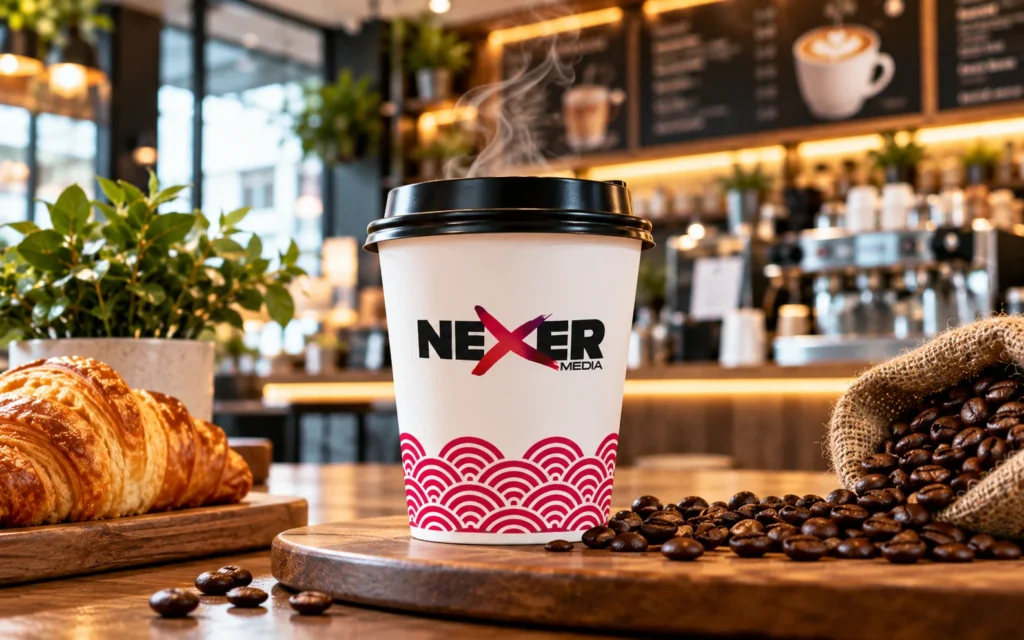
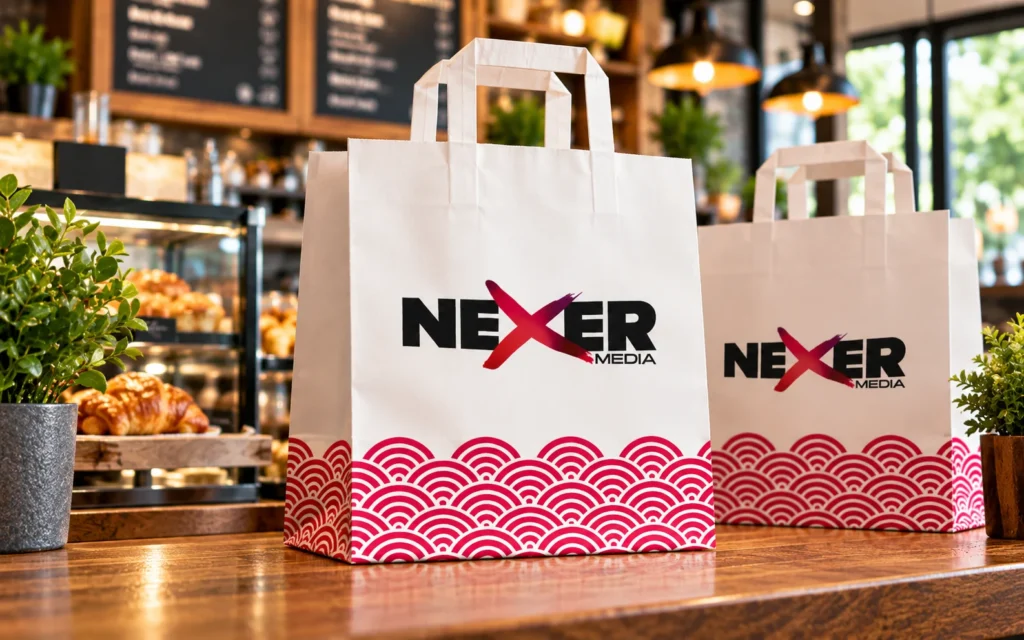
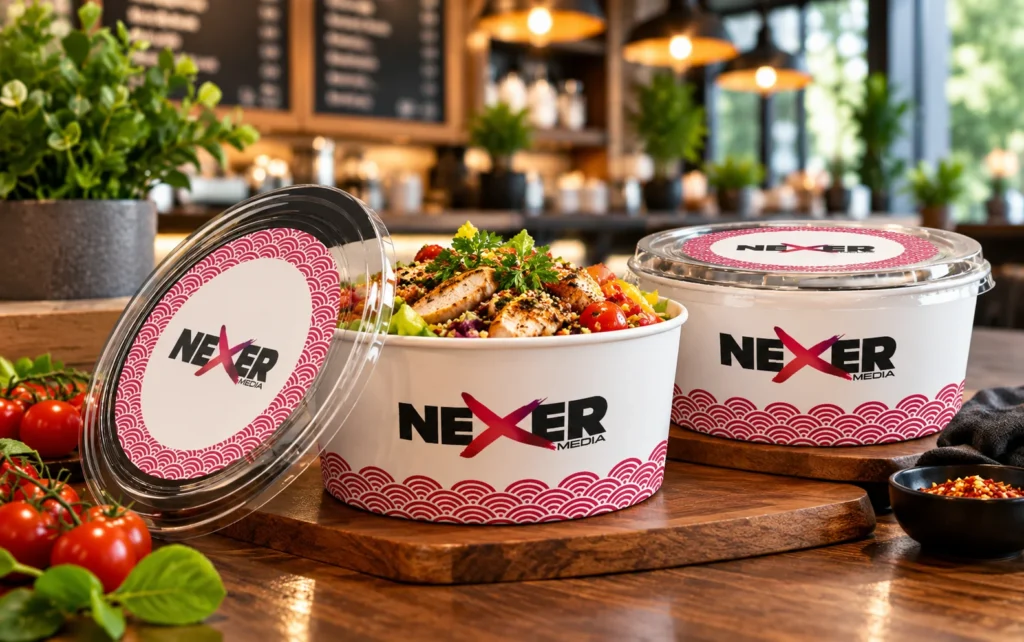
A paper cup displaying a café’s logo, a branded PET cup filled with a colorful juice, or a customized paper bag leaving a restaurant can become part of the customer’s overall perception of that business.
But as packaging becomes increasingly important to modern commerce, another question deserves equal attention:
How can businesses make smarter packaging decisions for tomorrow?
Sustainable packaging is not simply about replacing one material with another. It involves thinking more carefully about materials, product design, unnecessary waste, functionality, sourcing, printing, customer behavior, and the complete lifecycle of packaging.
For food and beverage businesses in particular, the challenge is to balance three priorities:
Functionality. Branding. Responsibility.
That balance represents the sustainable vision behind the future of packaging.
At Nexer Media, printing and branding are core parts of the company’s offering, including paper cups, PET cups, shopping bags, tray mats, flyers, brochures, and other printed materials.
For restaurants, cafés, bakeries, hotels, juice bars, and other growing businesses, this creates an opportunity to think beyond packaging as a disposable necessity.
The packaging decisions made today can help shape the brands—and the environment—we experience tomorrow.
What Does Sustainable Packaging Really Mean?
The phrase sustainable packaging is used frequently, but it should mean more than placing a green leaf on a package.
True sustainability requires a broader perspective.
Businesses should consider questions such as:
- How much material does the packaging require?
- Is the packaging appropriately sized for the product?
- Can unnecessary components be eliminated?
- Can the material be reused or recycled where appropriate infrastructure exists?
- Is the packaging durable enough to prevent product waste?
- Are environmental claims accurate and supportable?
- Can packaging be designed to perform multiple functions?
- How efficiently can packaging be transported and stored?
- Does the design encourage responsible customer behavior?
Sustainability therefore involves better decisions across the packaging lifecycle.
The goal should not simply be:
“Make packaging look environmentally friendly.”
It should be:
“Make packaging functional, thoughtful, efficient, attractive, and increasingly responsible.”
That distinction matters.
1. Packaging Has Become Part of the Environmental Conversation
For decades, packaging decisions were largely driven by three considerations:
Cost, convenience, and performance.
Those factors still matter.
But environmental impact has become another important consideration for businesses and consumers.
Food and beverage companies use large quantities of disposable packaging every day.
Think about a single busy café.
Every day it may distribute:
- Coffee cups
- Cold drink cups
- Takeaway bags
- Food containers
- Napkins
- Straws
- Lids
- Wrappers
- Stickers
Multiply that across hundreds of days and thousands of businesses, and packaging decisions quickly become significant.
That is why even relatively small changes can matter at scale.
A restaurant does not necessarily need to transform every packaging item overnight.
It can begin by identifying its highest-volume items and asking:
Can we make this packaging smarter?
2. Sustainable Packaging Begins With Using the Right Material for the Right Job
There is no single packaging material that is automatically perfect for every product.
Different foods and beverages have different requirements.
Hot coffee requires different packaging from cold juice.
A burger requires different packaging from soup.
Pastries require different protection from a delivery meal.
This is why responsible packaging begins with fitness for purpose.
Businesses should avoid unnecessary material while still ensuring that packaging performs its job properly.
Packaging that fails can create other forms of waste.
For example, if a poorly designed container causes food to spill or become damaged, both the packaging and the product may be wasted.
Smart sustainable packaging therefore requires balance.
The objective is not simply to use less material.
It is to use the appropriate amount of the appropriate material for the application.
3. Paper Packaging Can Play an Important Role
Paper-based packaging has become an increasingly visible component of food-service branding.
Restaurants and cafés commonly use paper-based products such as:
- Paper bags
- Paper cups
- Cup sleeves
- Food boxes
- Sandwich wrappers
- Bakery packaging
- Tray liners
One advantage of paper is its strong compatibility with branding.
Logos, colors, typography, patterns, QR codes, and marketing messages can all be incorporated into the packaging design.
This allows businesses to combine practical packaging with brand communication.
A kraft paper bag, for example, can carry takeaway food while simultaneously displaying the restaurant’s identity.
A custom paper cup can hold coffee while putting the café’s logo in front of everyone who sees it.
Nexer Media currently lists paper cups and shopping bags among its printing services, alongside PET cups and other printed products.
This illustrates an important principle:
Sustainable packaging does not have to mean abandoning branding.
Responsible packaging can still be beautiful packaging.
4. The Future Is About Reducing Unnecessary Packaging
One of the simplest sustainability principles is also one of the most powerful:
Don’t use material you don’t need.
Packaging often accumulates layers.
A drink might involve:
Cup → lid → sleeve → bag → additional wrapping.
Some of these elements may be necessary.
Others may not be.
Businesses should periodically review their packaging and ask whether every component genuinely contributes to:
- Protection
- Hygiene
- Transportation
- Temperature management
- Customer convenience
- Branding
If an element serves no meaningful purpose, there may be an opportunity to simplify.
Simplification can potentially reduce:
- Material consumption
- Storage requirements
- Procurement complexity
- Waste
- Packaging costs
Sustainability and operational efficiency can therefore sometimes support the same goal.
5. Better Packaging Design Can Reduce Material Without Reducing Impact
Using less material does not necessarily mean creating weaker branding.
In fact, minimalist packaging can often look more premium.
Imagine a kraft paper bag featuring:
- One strong logo
- A short tagline
- A website address
That’s enough to create recognition.
The entire surface does not need to be covered with ink and promotional messages.
The same principle applies to cups.
A transparent PET cup with a strategically positioned logo can create stronger visual impact than a heavily decorated design.
A double wall coffee cup may need only the brand mark and a simple pattern.
Good design is about making every element purposeful.
That principle aligns naturally with sustainability.
Less—but better.
6. Packaging Should Be Designed for Reuse Where Practical
Another way businesses can think more sustainably is by considering whether packaging may have useful life beyond its initial purpose.
Take paper bags.
A strong, attractive paper bag may be reused by customers for:
- Carrying personal items
- Lunches
- Storage
- Shopping
- Gifts
The business cannot control whether a customer reuses the bag.
But it can design packaging that makes reuse more likely.
Durability matters.
Appearance matters.
Size matters.
A well-designed branded bag has greater potential to remain useful than packaging that immediately becomes inconvenient.
There is also a branding advantage.
Every time a customer reuses a bag carrying your logo, the brand receives another opportunity for visibility.
7. Sustainable Packaging and Branding Can Work Together
Some businesses assume environmentally responsible packaging must look plain.
That is not necessarily true.
Sustainable design can be visually powerful.
Consider the natural appearance of kraft paper.
Its texture immediately creates associations with:
- Simplicity
- Craftsmanship
- Natural products
- Authenticity
- Minimalism
A strong black, white, or brand-colored logo can look extremely effective against that background.
Businesses can also incorporate subtle sustainability messages.
For example:
“Reuse Me.”
“Please Dispose Responsibly.”
“Small Choices. Better Tomorrow.”
The key is accuracy.
Businesses should avoid making environmental claims they cannot substantiate.
Authenticity is more valuable than exaggerated green marketing.
8. Avoiding Greenwashing Is Part of Sustainable Branding
As sustainability becomes more important, environmental language becomes more attractive to marketers.
That creates a risk.
Terms such as:
- Eco-friendly
- Green
- Sustainable
- Biodegradable
- Recyclable
- Compostable
should not be used casually.
Different materials behave differently under different waste-management conditions.
Something that is technically recyclable may not necessarily be accepted by every local recycling facility.
Something described as compostable may require specific industrial composting conditions.
Responsible brands should therefore avoid absolute claims unless they can support them.
Instead of vague statements like:
“This packaging saves the planet.”
businesses can communicate specific and verifiable information where available.
Sustainability should build trust.
It should never depend on misleading customers.
9. PET Cups Still Have a Role in Smart Packaging Strategies
Sustainable packaging discussions sometimes become overly simplistic:
Paper = good.
Plastic = bad.
Reality is more complicated.
Different materials have different properties and applications.
PET cups, for example, are particularly effective for displaying cold beverages because of their transparency.
They are commonly suitable for products such as:
- Iced coffee
- Smoothies
- Juice
- Cold brew
- Bubble tea
- Lemonade
- Milkshakes
- Layered beverages
The transparent material allows customers to see the product, which can be particularly valuable for colorful beverages.
A responsible packaging strategy therefore needs to consider the complete application rather than simply judging a material by name.
Where PET is appropriate, businesses can focus on using correctly sized packaging, avoiding unnecessary additional components, and providing accurate disposal information.
Nexer Media specifically lists PET cups within its printing portfolio, and one customer testimonial on its website mentions receiving customized paper bags and PET cups from the company.
10. Custom Packaging Can Reduce the Need for Separate Marketing Materials
This is an often-overlooked benefit of branded packaging.
Packaging can perform multiple jobs.
A plain cup holds a beverage.
A branded cup can:
- Hold the beverage
- Display the logo
- Promote the website
- Show a social handle
- Carry a QR code
- Communicate a message
Similarly, a branded paper bag can transport food while acting as a visible advertisement.
This doesn’t mean packaging replaces all advertising.
But it does mean businesses can make an item they already need contribute to marketing.
That is an efficient use of resources.
At its best, sustainable design is about making products work harder—not simply using more products.
11. Every Cup Can Become a Brand Impression
Imagine a café serving 300 drinks per day.
Over 30 days, that’s:
9,000 cups.
If those cups are generic, thousands of beverage containers leave the café without communicating who produced the drink.
Now imagine those same cups featuring recognizable branding.
Every cup potentially becomes another brand impression.
Customers carry them through:
- Offices
- Shopping malls
- Universities
- Hotels
- Events
- Streets
- Public spaces
Packaging becomes mobile.
This is one reason thoughtful custom packaging can simultaneously support operational and marketing goals.
Nexer Media describes its printing service as bringing ideas to life through printing and branding, which aligns directly with this idea of transforming functional materials into branded touchpoints.
12. Packaging Can Encourage Better Customer Behavior
Packaging design can also communicate responsible disposal behavior.
Small instructions can make a difference.
Depending on the actual material and available disposal options, packaging could communicate information such as:
“Please Recycle Where Facilities Exist.”
“Reuse This Bag.”
“Dispose Responsibly.”
Clear communication is better than assuming customers know what to do.
QR codes could also potentially provide additional information about:
- Materials
- Disposal
- Recycling
- Brand sustainability initiatives
The physical package can therefore become an educational touchpoint.
13. Sustainable Packaging Must Still Protect the Product
There is an important point businesses should never forget:
Packaging has to work.
Sustainability does not justify poor performance.
A paper bag that tears before the customer reaches their car is not good packaging.
A coffee cup that leaks is not good packaging.
A food box that collapses during delivery is not good packaging.
Product loss creates waste too.
Packaging should therefore be evaluated according to:
- Strength
- Heat resistance
- Moisture performance
- Weight capacity
- Food compatibility
- Transportation requirements
- Storage
- Customer convenience
Sustainability and functionality must work together.
14. Smart Packaging Can Help Reduce Food Waste
Food waste is another important part of the sustainability conversation.
Packaging exists partly to protect products.
Good packaging can help food survive transportation and reach customers in the intended condition.
Consider delivery.
A poorly designed takeaway system might allow:
- Containers to move around
- Drinks to spill
- Food to become crushed
- Sauces to leak
- Products to mix together
If the customer can no longer consume the food, the environmental impact extends beyond the packaging.
The ingredients, cooking energy, transportation, and packaging may all have been wasted.
Smart packaging therefore protects more than the product.
It protects the resources invested in producing that product.
15. Right-Sizing Packaging Matters
Imagine putting a small sandwich inside an enormous takeaway bag.
Technically, it works.
But it uses more material than necessary.
It also takes up more:
- Storage space
- Delivery space
- Transportation volume
Right-sizing means matching packaging dimensions to the product.
Restaurants should consider maintaining several packaging sizes rather than automatically using one oversized format for everything.
This can create:
- Better presentation
- More efficient material use
- Easier storage
- Improved delivery packing
Sustainable packaging isn’t always about dramatic innovations.
Sometimes it is simply about choosing the correct size.
16. Sustainable Packaging Can Strengthen Customer Perception
Packaging communicates values.
When customers receive thoughtful packaging, they may notice that the business pays attention to detail.
Consider a restaurant order arriving in:
- Properly sized packaging
- Consistent branding
- Minimal unnecessary materials
- A sturdy branded bag
- Clearly presented food
The experience feels intentional.
Compare that with an order involving excessive plastic, mismatched containers, multiple unnecessary bags, and inconsistent branding.
The first feels more professional.
Sustainability and premium presentation are not opposites.
When executed correctly, they can reinforce each other.
17. Sustainability Can Become Part of Brand Identity
The strongest sustainability strategies are not isolated campaigns.
They become part of how a business operates.
For example, a café might gradually build an identity around:
- Thoughtful packaging
- Reduced unnecessary materials
- Responsible sourcing
- Reusable options
- Clear disposal information
- Minimalist design
Over time, customers begin associating those decisions with the brand.
This is more credible than launching a one-time “green campaign” without changing actual operations.
Consistency builds authenticity.
18. Packaging Is Particularly Important for Delivery Businesses
Food delivery has changed the relationship between packaging and branding.
When customers visit a restaurant physically, they experience:
- Interior design
- Lighting
- Furniture
- Staff
- Music
- Signage
- Atmosphere
Delivery removes most of those touchpoints.
What remains?
The food and its packaging.
That makes packaging enormously important.
For cloud kitchens and delivery-first businesses, packaging may effectively become the physical storefront.
A carefully designed order containing a branded bag, properly sized food containers, and professionally printed beverage cups can create a stronger experience than generic packaging.
Sustainability should be considered within this system from the beginning.
19. Cafés Have a Major Opportunity to Rethink Everyday Packaging
Coffee businesses distribute enormous quantities of takeaway items.
Consider everything accompanying one order:
- Cup
- Lid
- Sleeve
- Napkin
- Stirrer
- Bag
Not every customer necessarily needs every item.
One sustainability opportunity is simply asking whether accessories should automatically accompany every order.
Operational decisions can sometimes reduce waste without affecting customer experience.
At the same time, better cup construction may reduce the need for separate components in certain situations.
For example, appropriately designed double wall cups can provide additional insulation compared with basic single-wall construction, potentially reducing the need for a separate sleeve in suitable applications.
The broader principle is simple:
Design the complete packaging system, not individual pieces in isolation.
20. Sustainable Packaging Can Still Be Highly Creative
Sustainability should not eliminate creativity.
Businesses can use thoughtful packaging to create distinctive designs through:
- Minimal typography
- Natural textures
- Bold logos
- Creative patterns
- Limited-color printing
- QR codes
- Brand stories
- Reuse messages
A simple paper bag can become visually memorable.
A coffee cup can become recognizable from across the room.
A PET cup can combine beverage visibility with strategically positioned branding.
The goal is to make design intentional.
Every printed element should have a reason to exist.
21. Packaging Should Become Part of a Complete Brand System
The strongest brands don’t design packaging products independently.
They create systems.
Imagine a café using:
Paper Cups
For hot beverages.
PET Cups
For cold beverages.
Paper Bags
For takeaway orders.
Tray Mats
For dine-in presentation.
Printed Materials
For promotions and menus.
Every element uses:
- The same logo
- The same typography
- The same color palette
- The same design philosophy
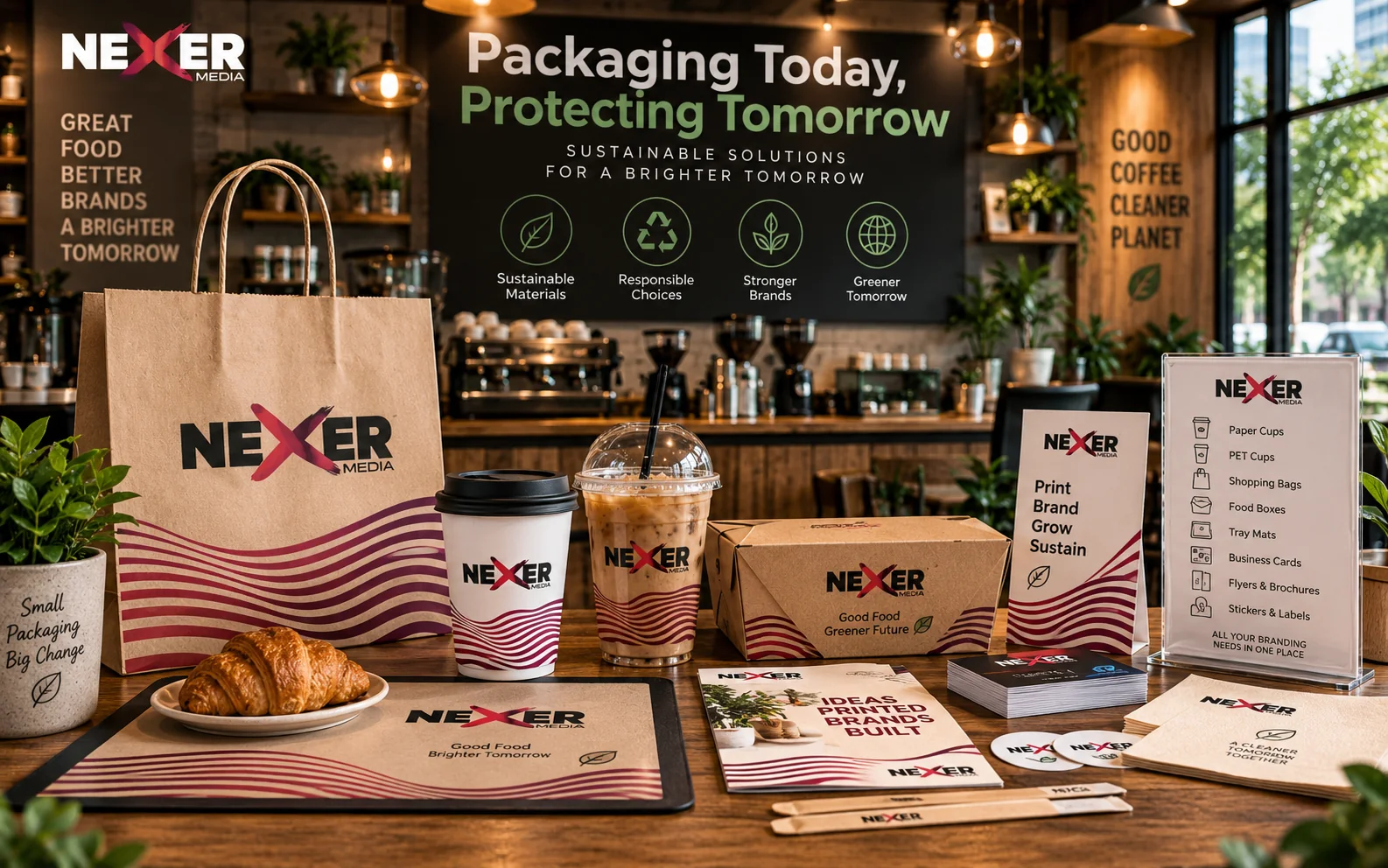
Nexer Media’s current printing portfolio includes paper cups, PET cups, shopping bags, tray mats, business cards, flyers, and brochures, providing several of the physical touchpoints businesses can coordinate under one visual identity.
Consistency makes businesses easier to recognize.
22. Small Businesses Can Make Meaningful Changes Too
Sustainable packaging isn’t reserved for multinational companies.
Small restaurants and cafés can begin with manageable changes.
A practical transition might look like this:
Stage 1: Audit current packaging.
Identify everything being used.
Stage 2: Find unnecessary items.
Determine whether some components can be removed or reduced.
Stage 3: Right-size packaging.
Match bags, cups, and containers to actual products.
Stage 4: Improve branding.
Create consistent packaging designs.
Stage 5: Review materials.
Ask suppliers for information about construction and disposal.
Stage 6: Educate customers.
Use clear, accurate disposal or reuse messaging where appropriate.
Stage 7: Measure consumption.**
Track packaging usage and identify further opportunities.
Sustainability is often more realistic as continuous improvement than as a single dramatic transformation.
23. Growing Businesses Need Scalable Packaging
A sustainable packaging strategy must also work economically and operationally.
A solution that works for 50 orders per day may not work for 1,000.
Growing businesses should consider:
- Minimum order quantities
- Storage
- Production lead times
- Monthly consumption
- Seasonal demand
- Multiple locations
- Printing consistency
- Inventory management
Standardizing branded packaging can make expansion easier.
When a business opens another location, the packaging identity remains the same.
The customer experience becomes more consistent.
That scalability is part of responsible packaging planning.
24. Sustainability and Business Efficiency Can Support Each Other
Environmental improvements are sometimes presented as being automatically more expensive.
That isn’t always the full picture.
Some sustainability strategies are fundamentally efficiency strategies.
For example:
Reducing unnecessary packaging may reduce material consumption.
Right-sizing may improve storage efficiency.
Standardizing products may simplify purchasing.
Ordering according to accurate consumption data may reduce emergency purchasing.
Eliminating unnecessary components may simplify service.
Better packaging may reduce product damage.
The objective should therefore be to look for solutions that make sense both environmentally and operationally.
The strongest sustainability strategies are often those businesses can maintain over the long term.
25. The Future of Packaging Will Be Smarter
Tomorrow’s packaging will need to do more than simply contain products.
Businesses will increasingly expect packaging to combine:
Protection
The product must arrive safely.
Convenience
Customers need practical packaging.
Branding
Packaging should communicate identity.
Efficiency
Businesses need scalable purchasing and storage.
Communication
Packaging can provide instructions and information.
Responsibility
Material choices and unnecessary waste deserve consideration.
Digital Integration
QR codes can connect physical packaging with websites, menus, loyalty programs, and other digital experiences.
The future isn’t simply about replacing today’s package with another package.
It is about designing a smarter packaging ecosystem.
Nexer Media’s Sustainable Vision: Packaging Today, Protecting Tomorrow
For Nexer Media, the opportunity lies at the intersection of printing, packaging, and branding.
The company’s existing printing offering includes products central to food and beverage packaging, including paper cups, PET cups, and shopping bags, as well as other branded printed materials. Nexer Media describes its printing service as combining printing with branding, and its website includes a customer testimonial specifically referring to customized paper bags and PET cups.
That provides the foundation for a simple vision:
Create packaging that performs today while encouraging smarter choices for tomorrow.
For businesses, that means thinking beyond what packaging looks like.
It means considering:
- What it is made from
- How much material is necessary
- How effectively it protects the product
- Whether it can serve multiple purposes
- How customers interact with it
- How accurately sustainability is communicated
- How packaging strengthens the brand
Sustainability does not require sacrificing creativity.
And branding does not require unnecessary waste.
The two can evolve together.
Explore Nexer Media’s printing and branding solutions at Nexer Media. The company’s current portfolio spans paper cups, PET cups, shopping bags and other customizable print materials for businesses.